What Is an Aggregation Switch and How to Choose?
Discover the role of aggregation switches. Explore differences between aggregation, access, and core switches, and choose the right model for your network.

AOS-CX 10.13 Link Aggregation Guide (All AOS-CX Series
Examples in this document are representative and might not match your particular switch or environment. The slot and port numbers in this document are for illustration only and might be
Aggregation layer | FortiSwitch 7.6.0 | Fortinet Document Library
The most appropriate FortiSwitch unit to form the aggregation layer comprises many 10/25/40 gigabit Ethernet ports to address the access layer and a few 100-GbE ports towards the core layer.
What is an Aggregate Switch?
An aggregate switch consolidates traffic from access switches, while a core switch forms the backbone of the network, interconnecting multiple aggregate switches and providing access to
Aggregated Ethernet Interfaces Overview
Overview IEEE 802.3ad link aggregation enables you to group Ethernet interfaces to form a single link layer interface, also known as a link aggregation group (LAG) or bundle. Aggregating multiple links
Link Aggregation: Static vs Dynamic, LACP, and MLAG Configuration
This article provides a comprehensive explanation of link aggregation — covering LACP, static vs dynamic link aggregation, and MLAG (Link Aggregation Plus) — along with real
EOS 4.36.0F
Interfaces on both devices participate in a distributed port channel, enabling all active paths to carry data traffic while maintaining the integrity of the Spanning Tree topology. Aggregates multiple Ethernet
Link Aggregation Control Protocol
Layer 1 (Physical Layer): Combines multiple physical Ethernet links into a single logical communication channel. Layer 2 (Data Link Layer): Groups switch ports into an aggregation set and
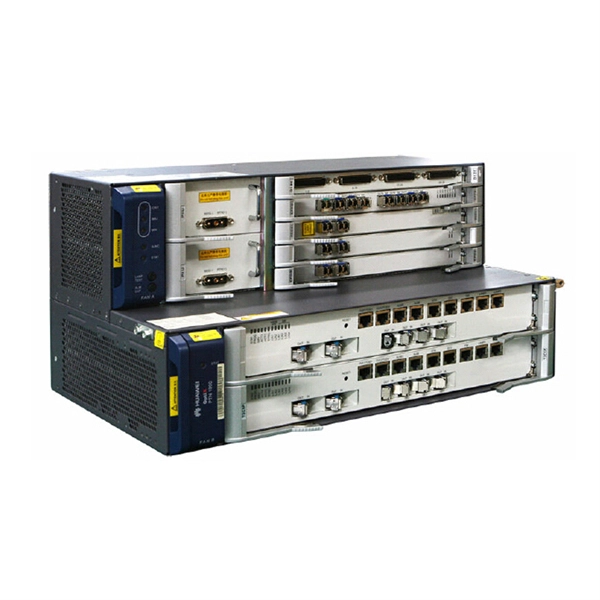
Everything You Need to Know About Aggregation Switch
An aggregation switch operates at Layer 2 or Layer 3 of the OSI model, depending on the configuration and topology of the network. The controller uses protocols, such as Link Aggregation
What is Switch Aggregation, Its Role and Selection Advice
When a Layer 2 switch is used as the aggregation switch, routing and management policies are determined by the core switch rather than the aggregation switch. This article wraps up
Telecom Racks & Cabinets
19-inch racks, wall-mount cabinets, open frames with high load capacity and seismic rating.
Outdoor Climate Cabinets
IP55/IP66 outdoor enclosures with integrated cooling/heating, -40°C to +55°C operation.
Smart PDUs & Power Distribution
Intelligent PDUs with remote monitoring, per-outlet switching, and environmental sensors.
Shelters & Network Cabinets
Prefabricated telecom shelters, emergency comms shelters, and network cabinets with cable management.