Browse technical articles and resources about telecom racks, outdoor cabinets, PDUs, smart power distribution, shelters, and network cabinets best practices.
Contact online >>
Attach a ground wire from one of the threaded studs (A) at the bottom of the housing, to the mounting plate (B). The ground resistance between all system parts shall be <. Today, we're diving deep into the world of distribution box grounding, breaking down the standards, and shining a light on those sneaky mistakes that even experienced electricians sometimes make. Each DISTRIBUTION BOX and controller must be grounded. 26 mm 2 (10 AWG) ground wire must be used, and in all other markets a 6 mm 2 must be used. Stable connection: With anti-vibration and anti-loosening structure, it ensures tight contact even in a vibrating environment, avoiding potential power failure hazards 2. Compact design: Small size, space-saving, suitable for high-density wiring requirements. ounding electrical installations. Understanding the difference between bonding and grounding will help you correctly app y the provisions of. IPMENT, STRUCTURES, ETC. IN ELECTRICAL STATIONS INCLUDING TRANSMISSION AND DISTRIBUTION SUBSTAT GR THAN 8 FT FROM THE FENCE. THE FENCE SHALL BE GROUNDED SEPARATELY FROM THE GRID UNLESS OTHERWISE NOTED ON THE A PROPRIATE PROJECT DRAWING.
[PDF Version]
26 mm 2 (10 AWG) ground wire must be used, and in all other markets a 6 mm 2 must be used. On the US market, a 5. Each DISTRIBUTION BOX and controller must be grounded. Grounding of the units: Attach a ground wire from one of. Whether you're a seasoned pro or just starting out, this comprehensive guide will give you practical insights into proper grounding techniques, with a special focus on how selecting quality materials from a reliable building material supplier impacts your entire system's safety and longevity. Grounding is a mechanism to protect distribution equipment and people under normal operating conditions, abnormal operational (overcurrent and overvoltage) responses, and hazardous conditions such as shocks. This helps to reduce the potential difference that exists between conductive parts and the earth. Protective grounds must be installed so all phases of lines or cable are visibly and effectively bonded together in a multi-phase. Proper grounding is the non-negotiable foundation of electrical safety.
[PDF Version]
26 mm 2 (10 AWG) ground wire must be used, and in all other markets a 6 mm 2 must be used. On the US market, a 5. Each DISTRIBUTION BOX and controller must be grounded. Grounding of the units: Attach a ground wire from one of. Whether you're a seasoned pro or just starting out, this comprehensive guide will give you practical insights into proper grounding techniques, with a special focus on how selecting quality materials from a reliable building material supplier impacts your entire system's safety and longevity. The static wire shall be grounded at every pole except manually ope ated group air break switch poles. These arresters (mostly zinc oxide) are solid state and are di ect connected. In industrial and civil circuit wiring, the stainless steel monitor enclosure device serves as the physical casing for various switches and control components. MV neutral of power transformers is ground nsformers have DYn11 connections.
[PDF Version]
Install grounding wire to provide a current with alternate paths to avoid electrical shocks in case of power surges. Connect electrical service boxes to grounding rods. Whether you're a seasoned pro or just starting out, this comprehensive guide will give you practical insights into proper grounding techniques, with a special focus on how selecting quality materials from a reliable building material supplier impacts your entire system's safety and longevity. Correct grounding of services depends upon understanding the definition and role of the grounded conductor. The neutral conductor is typically the grounded conductor connected to the system's neutral point, carrying current under normal operation.
[PDF Version]
26 mm 2 (10 AWG) ground wire must be used, and in all other markets a 6 mm 2 must be used. On the US market, a 5. ected to shield it from lightning. It is located at an elevation such that a line passing through the static wire and the outermost conductor below it is at a 30° aximum angle with a vertical line. The static. Today, we're diving deep into the world of distribution box grounding, breaking down the standards, and shining a light on those sneaky mistakes that even experienced electricians sometimes make. We quote literally: "Grounding devices for protective. A substation 's lightning protection grounding system is vital. It serves as the core safeguard for both the safe operation of electrical equipment and the safety of personnel within the station. Each DISTRIBUTION BOX and controller must be grounded. Grounding of the units: Attach a ground wire from one of.
[PDF Version]
NEC Article 250 outlines the specific wires and jumpers needed for a safe system: Connects the ground rod to the grounding bus bar in the main panel. Sized according to NEC Table 250. 66, based on service-entrance conductor size. Grounding electrode conductors must be connected at. The National Electrical Code (NEC) provides clear guidelines for ground wire sizing through Table 250. 122, but understanding how to apply these requirements correctly can make the difference between a safe installation and a costly code violation. You can't use the structural metal frame of a building as an EGC [250. Here is a perfect example of why it is so important you completely. This comprehensive guide covers equipment grounding conductors, grounding electrode conductors, and proper grounding practices for safe electrical installations.
[PDF Version]
Grounding of the units: Attach a ground wire from one of the threaded studs (A) at the bottom of the housing, to the mounting plate (B). The ground resistance between. Grounding is a mechanism to protect distribution equipment and people under normal operating conditions, abnormal operational (overcurrent and overvoltage) responses, and hazardous conditions such as shocks. Grounding is necessary to assure correct operation of electrical devices, to assure safety. Power from factory ground must be installed by a qualified electrician. Each DISTRIBUTION BOX and controller must be grounded. 26 mm 2 (10 AWG) ground wire must be used, and in all other markets a 6 mm 2 must be used. Equipment Protection: Grounding protects substation.
[PDF Version]
A wire type equipment grounding conductor of a circuit passing through the box is not required to be connected to the box. Correct grounding of services depends upon understanding the definition and role of the grounded conductor. Grounding electrode conductors must be connected at. Today, we're diving deep into the world of distribution box grounding, breaking down the standards, and shining a light on those sneaky mistakes that even experienced electricians sometimes make. 30 unless the transformer's primary supply is from a 277V or 480V system or an ungrounded system [250. Systems over 50V are a different story.
[PDF Version]
The NEC outlines various permissible grounding electrode types, including: Ground Rods: These are copper or galvanized steel rods driven into the ground, typically at least 8 to 10 feet deep. If you. Section 250. 52 to create a grounding electrode system as required by Section 250. 5 is an article in the National Electrical Code that addresses requirements for underground electrical installations, including minimum cover requirements—the measurement used to determine the distance from the top of an underground cable or raceway to the finished grade. Whether you're a seasoned pro or just starting out, this comprehensive guide will give you practical. BLE OF CON ENTS – S CTION / CHA TER LISTIN CHAPTER 2 CHAPTER 1. EARTHWO K TRENCH E ENCASED D URIED DUCT CHAPTER 2 CHAPTER 3 CHAPTER 4 CHAPTER 1.
[PDF Version]
26 mm 2 (10 AWG) ground wire must be used, and in all other markets a 6 mm 2 must be used. On the US market, a 5. Today, we're diving deep into the world of distribution box grounding, breaking down the standards, and shining a light on those sneaky mistakes that even experienced electricians sometimes make. Whether you're a seasoned pro or just starting out, this comprehensive guide will give you practical. Power from factory ground must be installed by a qualified electrician. Each DISTRIBUTION BOX and controller must be grounded. Grounding of the units: Attach a ground wire from one of. NEC 314. 28: Requires junction boxes to be made of non-combustible materials like stainless steel, aluminum, or UV-resistant plastic. 16: Dictates volume size in cubic inches, requiring 18 cu in for 3 to 6 conductors and 20 cu in for 7 to 8 conductors. 26: Mandates a minimum. Navigating the grounding and bonding of electrical systems can be a tall task unless you have taken the time to familiarize yourself with the requirements of Article 250 of NFPA 70 ®, National Electrical Code® (NEC ®). Let's take a look at each one in more detail.
[PDF Version]
Distribution box and switch box should not exceed 30 meters. Generally, distribution boxes can be divided into three levels of secondary protection, that is, three levels of distribution boxes: general. Clearance: Electrical panels must be installed in a readily accessible area with a minimum clearance of 30 inches (762 mm) wide, 3 ft (36 inches or 914 mm) deep, and 6. 5 feet (≈ 2 meter) high in front of the panel. The panelboard's door (hinged cover) shall be able to be opened to a full 90°. NEC Table 110-34, updated from 600 V to 1000 V in 2017 Minimum clearances are established for work spaces in front of high voltage - electrical equipment such as switchboards, control panels, switches, circuit breakers, switchgear and motor controllers. However, the ground rod should be placed as close as possible to the panel to ensure an effective ground connection. Rod Types: Copper-Bonded Steel (common), Galvanized Steel, or Solid. Why are outdoor, waterproof, electrical connector/splice boxes located a certain distance from ground level; e. The main issue is what the box is listed for, height from ground.
[PDF Version]
In the United States, the NEC permits the equipment grounding conductor to be bare, covered, or insulated. When insulated, it must be green or green with one or more yellow stripes. These colors are reserved exclusively for grounding and cannot be used for any other conductor. In US residential and commercial wiring, the electrical ground wire color is green, green with a yellow stripe, or bare copper, per NEC rules, indicating the safety ground path and contrasting with the neutral and hot conductor colors. Electrical wiring depends on visual clarity as much as it does. This article will help you identify wire-type equipment grounding conductors. National Electrical Code (NEC) Section 250. The basic rules are: Wire-type equipment. Optical fiber composite overhead ground wire (OPGW) 1. Application OPGW is mainly applied in communication line of newly constructed high voltage transmit electricity system with 35 KV or above, or replacement of existing ground wire of previous overhead high voltage transmit electricity system. The wiring color codes are the standard safety language of electricity.
[PDF Version]
Grounding of the units: Attach a ground wire from one of the threaded studs (A) at the bottom of the housing, to the mounting plate (B). The ground resistance between. For temporary wiring over 600 volts, nominal, fencing, barriers, or other effective means shall be provided to prevent access of other than authorized and qualified personnel. Cabinets, boxes, and fittings - Conductors entering boxes, cabinets, or fittings. To help make sure temporary wiring is in safe and eficient operating condition, strict enforcement of installation and maintenance standards should be st control work practices involving temporary wiring. A safe, eficient temporary wiring system. The subject of grounding and bonding can be confusing this is especially true for portable and vehicle (trailer) mounted generators used in the field to supply temporary/emergency power for applications such as construction, industrial, special events and emergency power during disasters. Each DISTRIBUTION BOX and controller must be grounded.
[PDF Version]
A separate grounding busbar for the PE can provide a unified grounding point for the entire distribution box, while also facilitating on-site inspection and maintenance. Regarding the issue of PE grounding within the distribution blocks electrical series, larger capacity models will adopt a method of connecting PE to a separate grounding busbar. the electrical cabinet, junction box, control desk, etc. must be equipped with a PE-bus bar. The underside is sealed, so the bars can be safely mounted to conductive surfaces. Distribution Bar Covers— Distribution bar. For attaching the PE/PEN busbar 30 x 5, 30 x 10, 40 x 10 and 80 x 10 mm. Self-holding nut with knurled ring. For. Proper bonding is essential to create an equipotential plane between service grounds and equipment during fault and transient conditions. The most popular bonding. Improper grounding or earthing of “Distributed Control Systems (DCS)” or “Power Electronic Systems (PES)” can result in either mal-operation of the system / controller or failure of electronic control cards or sometimes even the embedded control software getting erased. Similarly, a bad quality of.
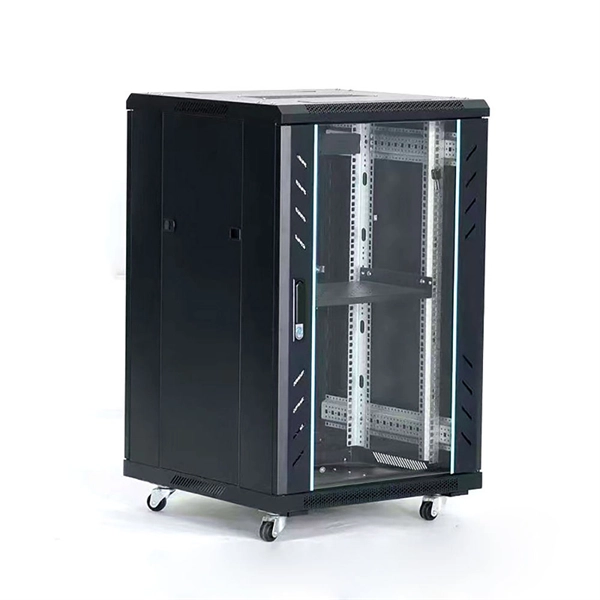
[PDF Version]19-inch racks, wall-mount cabinets, open frames with high load capacity and seismic rating.
IP55/IP66 outdoor enclosures with integrated cooling/heating, -40°C to +55°C operation.
Intelligent PDUs with remote monitoring, per-outlet switching, and environmental sensors.
Prefabricated telecom shelters, emergency comms shelters, and network cabinets with cable management.
We provide custom infrastructure solutions, from telecom racks to smart PDUs and outdoor shelters.
From design to deployment, our team ensures reliable, efficient, and scalable power & enclosure systems.
ul. Głogowska 128, 60-248 Poznań, Greater Poland Voivodeship, Poland
+48 537 928 416 | +48 537 928 416 | [email protected]